Blog ComparisonsTop 12 Pendo Competitors for Product Feedback in 2026
Top 12 Pendo Competitors for Product Feedback in 2026
Want better feedback collection & management than Pendo? In this post, I've listed all of the top competitors that offer the best feedback-focused tools. I analyzed their pros, cons, and pricing, so you don't have to. Let's dive in!

If you're serious about product management in 2026, you probably want the best tool available. Pendo is a good choice. This leading digital adoption platform offers powerful features such as product analytics, in-app guides, session replays, customer feedback collection, and more.
However, Pendo's digital adoption platform can be very expensive and difficult to customize, and its integrations don't always function as described.
This is why we prepared a list of the finest Pendo competitors. Whether you want to collect user feedback, product usage data, or in-app guidance, there's a tool in this list for you. 👇
The Best Pendo Alternatives for Product Feedback:
- ✨ Featurebase - All-in-one customer success tool, best value for money
- ProdPad - For larger companies, roadmapping and feedback collection
- UserBack - For large teams with many products
- Canny - For super small or enterprise companies, no in-between
- Userpilot - Best for those also looking for product tours & robust analytics
- ProductPlan - Best for issue management & roadmaps, poor collection features
- Rapidr - Feedback collection, good price for very large teams
- Frill - Simple design and lightweight widgets
- featureOS - Good for collecting feedback, poor for prioritizing it
- Trello - Best for simple idea and task management
- Productboard - Best for issue management, poor collection features
- Aha! - for large companies looking to handpick what they get
But before you run off to choose an alternative, let's go over Pendo's drawbacks. This will help you know what to avoid while choosing a competitor. 🔎
Why even switch from Pendo?
The problem with Pendo is that it's a product analytics tool at its core, not a feedback tool. It's got many drawbacks when it comes to collecting or managing feedback. We have listed the key ones so you can know what to look for in an alternative.
Steep learning curve
By far, the most common complaint about Pendo is how difficult it can be to get started with. Despite ample documentation and help from Pendo's support agents, you may run into a wall trying to understand how user behavior analytics work in this platform.
Here's what one UX researcher said on G2:
"I think Pendo's documentations need to improve a little bit more because it is actually difficult to understand what's going on. Just by reading the documentation itself and educating myself, I have to actually try an error to use the product as well as attend some webinars in order to learn how to use it. Not that easy, it takes a while for us to understand the initial setup. We actually work with the client success manager in Pendo to understand how to do it thoroughly."
Another user said that getting this digital insights platform off the ground wasn't as hard as using it consistently and getting value out of all the features:
"Some reports can feel a bit complex to set up, and some deeper analysis takes time to learn. More flexibility and simpler reporting would make it easier to use day to day. The initial setup was fairly straightforward, but getting the most value out of advanced features took some time and learning."
This brings us to our second point.
Pendo isn't a "set it and forget it" kind of tool
You can't just set up things like automatic data capture or advanced user segmentation and hope it sticks. According to multiple users, you'll have to make sure everything is running smoothly on the go.
"Maintaining feature tags for analytics is a constant challenge and requires attention and dedicated responsibility. Pendo is introducing ways to make this process more robust but it is still a largely manual effort. The initial feature tagging effort was large, and we made a number of mistakes which we are still correcting now." - G2 review
There is a lack of transparent pricing
Features such as automatic event tracking and deep behavioral analytics don't come cheap. The problem is that you can't tell how much they really cost since Pendo doesn't have publicly available pricing.
With a little bit of digging around, you can find out that it's normal to expect paying $100,000 or so annually for Pendo, which can be too much to stomach for smaller teams comprised of non technical users.
The 12 Best Pendo Alternatives for Product Feedback in 2026
Pendo is a complex digital adoption platform, and it may be difficult to find an app that does all the same things equally well (or better). However, we sat down and did some research to come up with this list of the best Pendo competitors to keep on your radar. Let's jump in!👇
1. Featurebase ✨
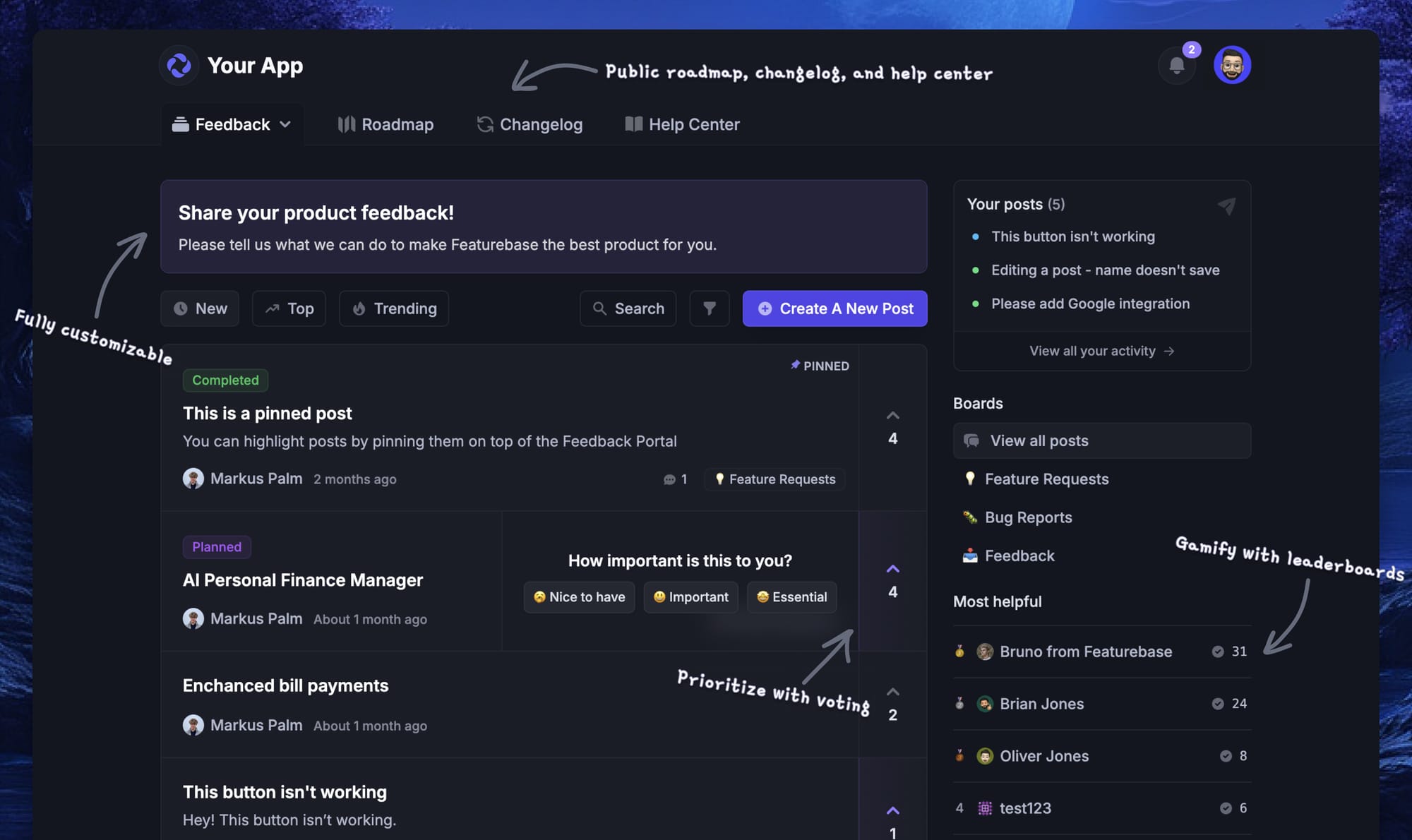
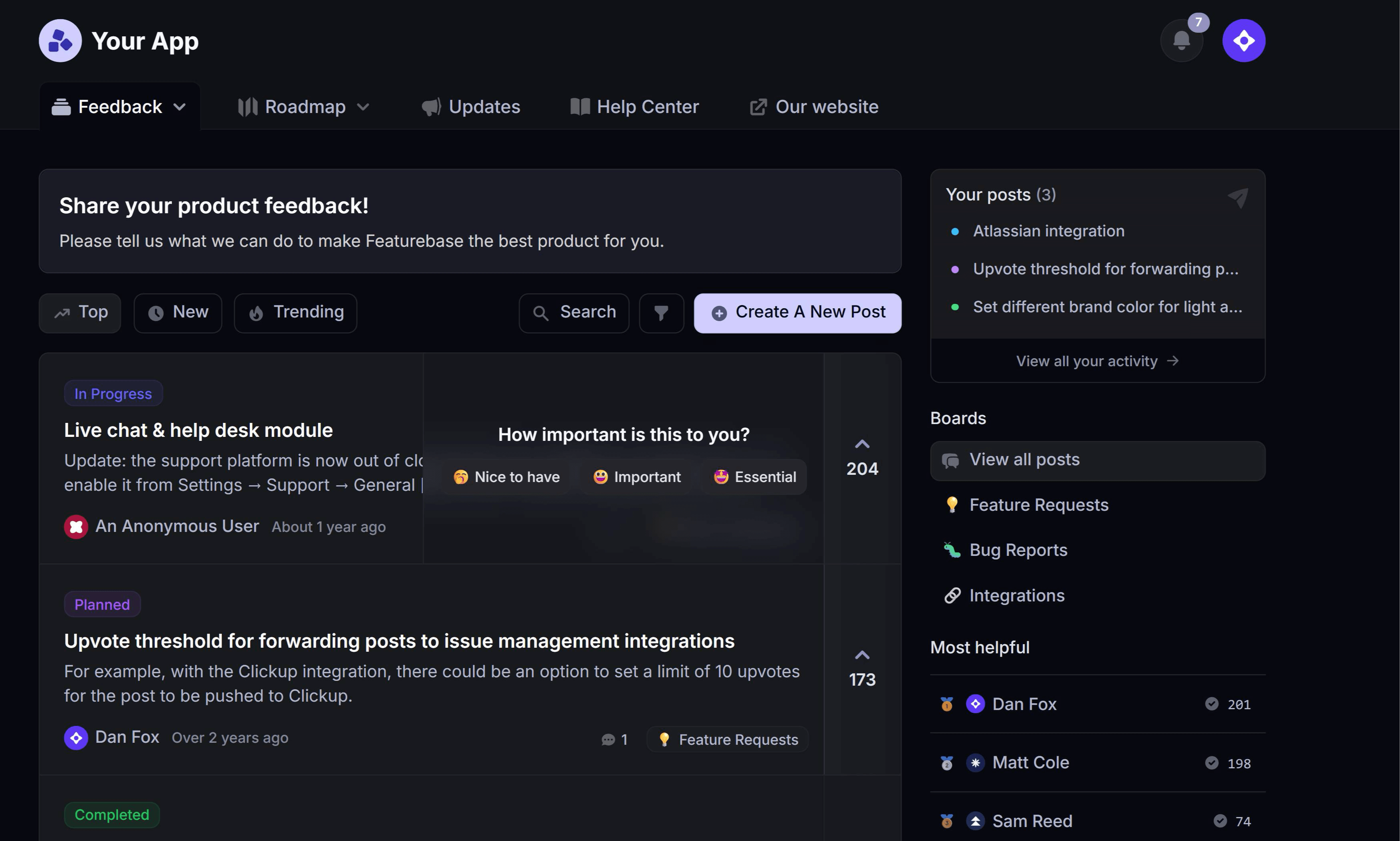
Featurebase's feedback forum
Featurebase is a modern feedback and roadmapping platform that helps product teams collect feedback, prioritize feature requests, and communicate product updates in one place.
Many SaaS companies use it to connect feedback from users, support conversations, and surveys, then turn that insight into product decisions for their web and mobile apps. If you want something that has the depth of Google Analytics, but built for product and customer success teams, and much easier to use, this is it.
Companies like Lovable, Raycast, and n8n rely on Featurebase to manage the full feedback cycle without needing several separate tools.
Top features
- Public and internal product roadmaps: create shareable roadmaps that show upcoming features, planned improvements, and completed releases so users stay informed about product progress.
- Feedback forum with feature voting: collect feature requests and product ideas through a public feedback board where users can submit suggestions and vote on ideas.
- Revenue-based prioritization: connect feedback and user analytics with customer revenue, company size, or account value so product teams can prioritize ideas with the highest business impact.
- AI feedback categorization: automatically group large volumes of feedback into themes, product areas, or projects so teams can analyze trends faster.
- Automated feature notifications: automatically notify users when a feature they requested is released, helping close the feedback loop.
- In-app widgets: embed feedback boards, changelogs, and help center widgets directly inside your product so users can submit feedback or read updates without leaving the app.
- Product changelog and release announcements: publish product updates and release notes through a changelog page, in-app widgets, and email notifications.
- Customer surveys: run surveys such as NPS, CSAT, and custom questionnaires to collect structured insights about user satisfaction and product experience.
- Automatic AI translations: translate feedback and comments automatically so global teams and international users can collaborate more easily.
- Integrations with product tools: connect Featurebase with tools such as Slack, Linear, Jira, and HubSpot so feedback and feature requests integrate with development workflows.
How it's better than Pendo
Featurebase focuses on feedback collection, feature prioritization, and product communication in one platform. While Pendo is mainly known for product analytics and tracking user behavior inside applications, Featurebase helps teams collect feedback, build product roadmaps, publish updates, and run customer surveys in a single system.
This makes it a strong choice for teams that want to manage the full feedback lifecycle without relying on multiple tools.
✨ Start collecting & managing product feedback with Featurebase for free →
2. ProdPad
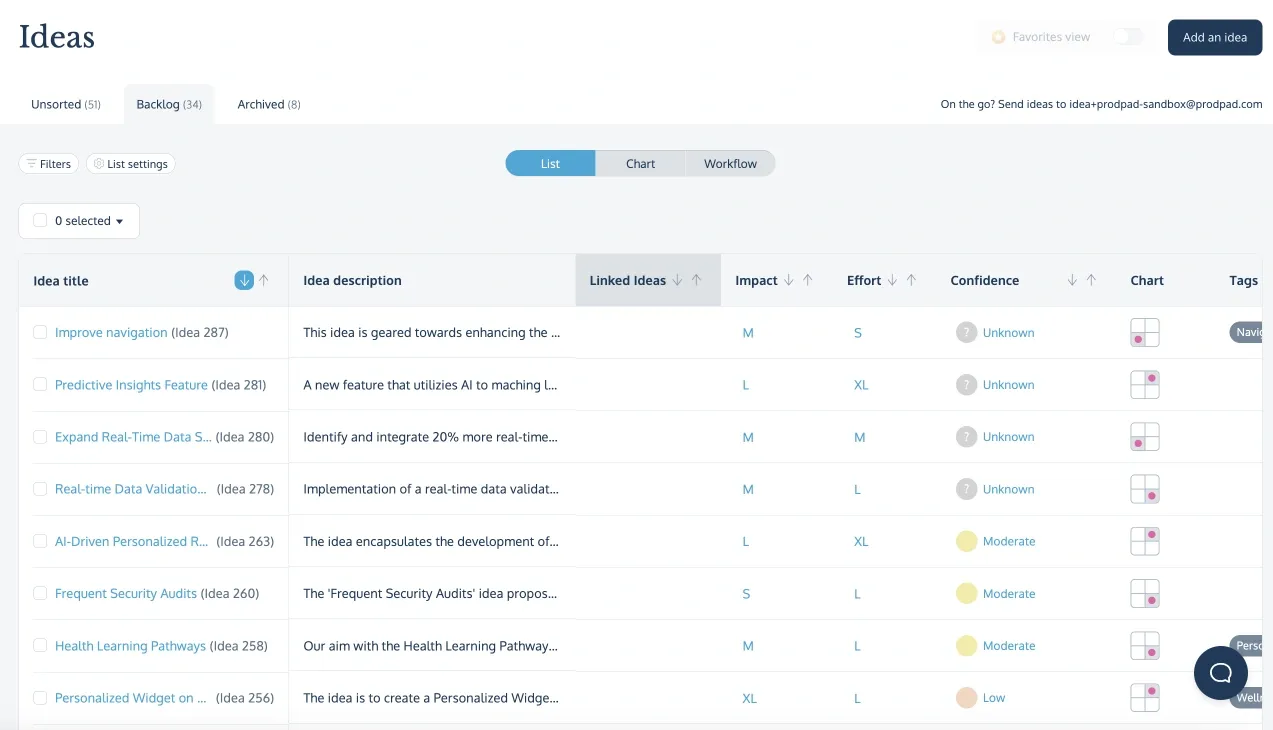
ProdPad is a product management platform that helps teams collect customer feedback, manage product ideas, and build structured product roadmaps. It focuses on helping product managers move from raw feedback and ideas to clear product plans. Teams often use ProdPad when they want a system for organizing feature requests, prioritizing ideas, and aligning product strategy with development work.
Top features
- Idea management boards: collect feature requests and product ideas from customers, stakeholders, and team members in one organized system.
- Customer feedback capture: gather feedback from support conversations, emails, interviews, and other channels and connect it to product ideas.
- Product prioritization tools: evaluate ideas using prioritization frameworks so product teams can decide which features should be built first.
- Product roadmaps: build flexible roadmaps that show upcoming features, product initiatives, and long-term product direction.
- Integrations with development tools: connect ProdPad with platforms such as Jira so approved ideas can move directly into engineering workflows.
How it's better than Pendo
ProdPad focuses more on product strategy and idea management. While Pendo is mainly built for product analytics and tracking user behavior inside applications, ProdPad helps product teams organize feedback, manage feature ideas, and turn them into structured product roadmaps. This makes it a better choice for teams that want stronger tools for product planning and prioritization.
Check out the best alternatives to ProdPad →
3. UserBack
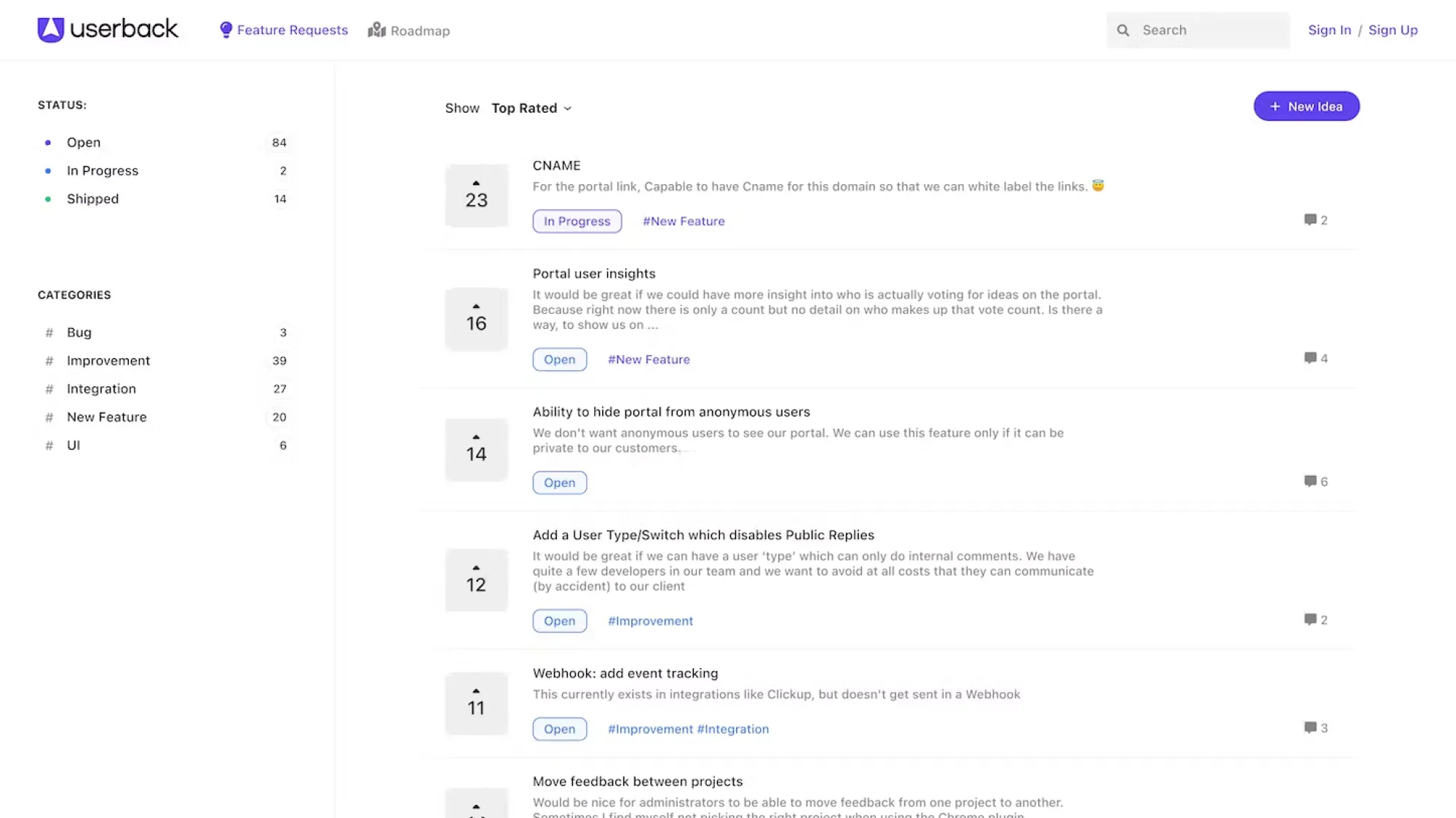
Userback is a visual feedback and bug reporting platform that helps product teams collect feedback directly from websites and web applications. It allows users to capture screenshots, record screens, and annotate issues when reporting bugs or suggestions. This makes it easier for developers and product managers to understand problems quickly and reproduce them without long explanations from users.
Top features
- Visual bug reporting: users can submit feedback with screenshots or screen recordings that show exactly what happened when an issue occurred.
- Screenshot annotation tools: users can highlight areas, draw on screenshots, and leave comments that explain the problem in context.
- In-app feedback widgets: add a feedback button to your product or website so users can submit bug reports or suggestions without leaving the page.
- Automatic technical details: each report includes metadata such as browser type, screen resolution, operating system, and page URL to help developers diagnose issues. Analyze product usage with dedicated analytics tools built for SaaS.
- Integrations with development tools: connect Userback with tools such as Jira, Trello, Slack, and other project management platforms so feedback automatically reaches the right team.
How it's better than Pendo
Userback is a stronger option for visual feedback and bug tracking workflows, for teams that want a complete understanding of how users experience their app, without using advanced analytics that come with Pendo.
While Pendo mainly focuses on product analytics and tracking user behavior inside applications, Userback allows users to submit visual feedback with screenshots and recordings, giving development teams clearer insight into bugs and usability issues.
Check out the best UserBack alternatives here →
4. Canny.io
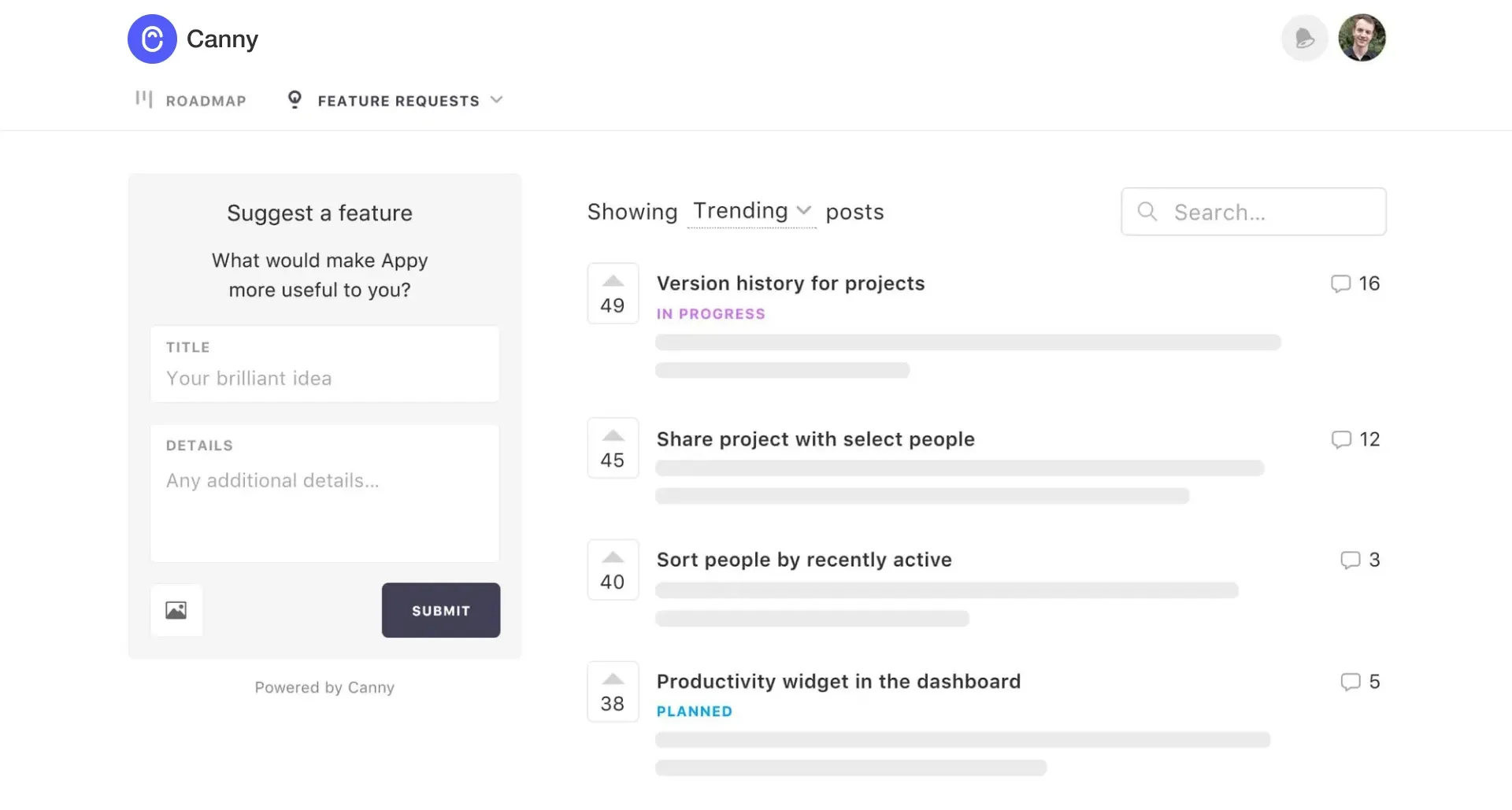
Canny is a product feedback management platform that helps SaaS teams collect feature requests, organize customer insights, and prioritize product improvements. It provides structured feedback boards where users can submit ideas, vote on requests, and follow product updates. Many product managers use Canny when they want a clear system for turning customer feedback into product roadmap decisions.
Top features
- Feedback boards: create public or private boards where users can submit feature requests, report issues, and discuss ideas with the product team.
- Feature voting: allow customers to vote on suggestions so product managers can quickly identify the most requested improvements.
- Customer feedback organization: tag and categorize feedback to detect patterns in what users are asking for and connect insights to product features.
- Public product roadmaps: share planned features and development progress so users can understand what the team is working on.
- Changelog and release updates: publish announcements when features are shipped and notify users who requested or voted for them.
How it's better than Pendo
Canny focuses more on collecting and managing product feedback. While Pendo is mainly built for product analytics and tracking user behavior inside applications, Canny gives product teams a structured way to gather feature requests, prioritize ideas through voting, and communicate updates through roadmaps and changelogs. This makes it a better choice for teams that want to build their roadmap around customer feedback.
Check out these affordable Canny alternatives →
5. Userpilot
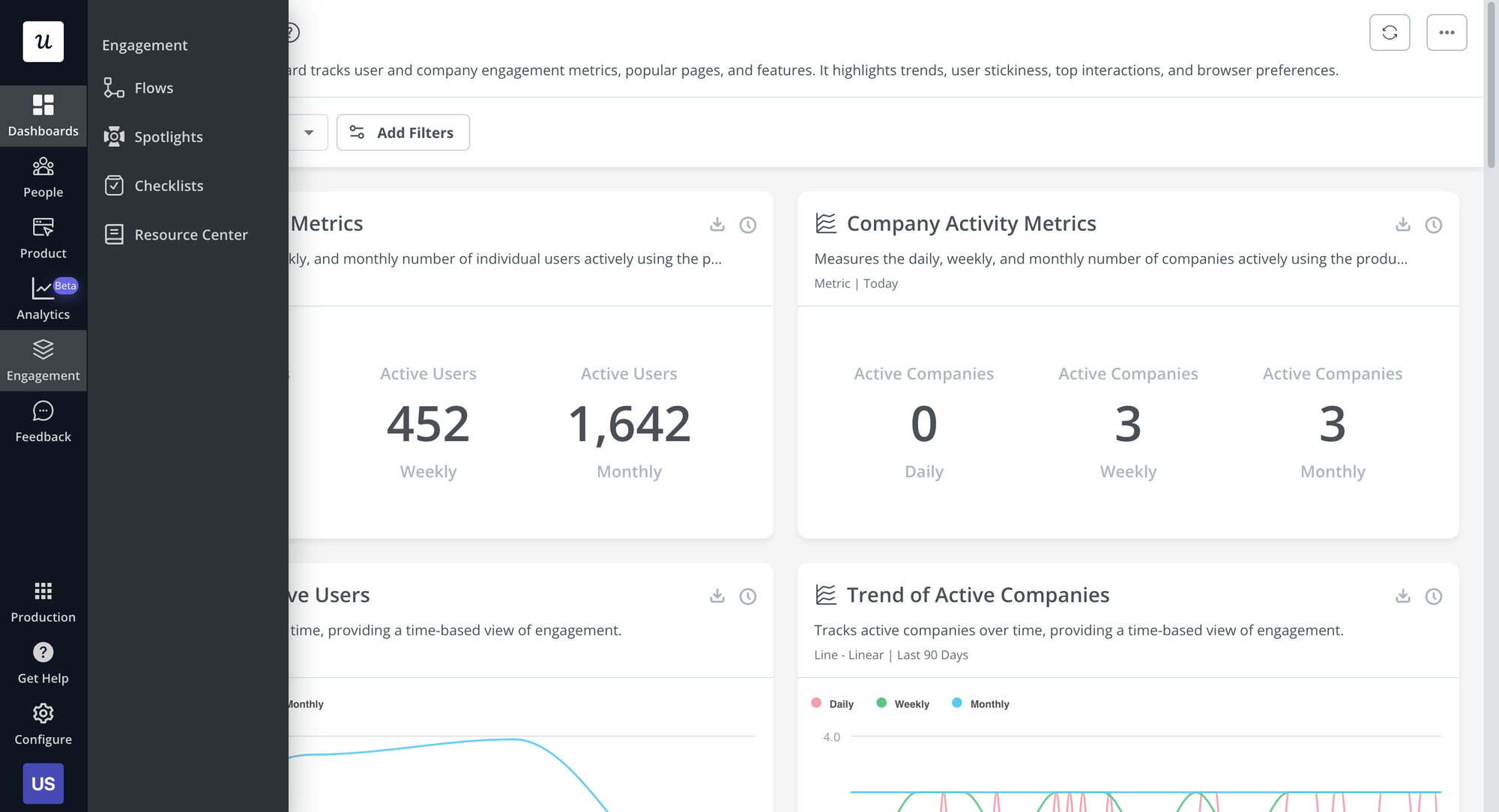
Userpilot is a product growth platform that helps SaaS companies improve product adoption, collect user feedback, and guide users through their product with interactive experiences. It allows product teams to build in-app onboarding flows, surveys, and feature announcements without needing engineering resources. Companies often use Userpilot when they want to understand user behavior and improve the user journey inside their application.
Top features
- In-app user onboarding flows: create product tours, tooltips, and walkthroughs that guide new users through key features and help them learn how the product works, increasing user engagement and feature adoption.
- In-app surveys: collect feedback from users with surveys such as NPS, satisfaction surveys, or custom feedback forms.
- User segmentation: group users based on behavior, usage patterns, or attributes so teams can deliver targeted in-app experiences.
- Feature tagging and usage tracking: monitor how users interact with different product features to understand adoption and engagement. Get actionable insights on user interactions across different user segments.
- In-app announcements: notify users about new features, product updates, and improvements directly inside the product interface.
How it's better than Pendo
Userpilot offers more flexibility for building in-app onboarding experiences and collecting feedback without heavy implementation. While Pendo is known for product analytics features and enterprise-level product experience tools, Userpilot makes it easier for product teams to create user onboarding flows, surveys, and feature announcements that improve product adoption and guide users through the product journey.
Check out the best Userpilot alternatives →
6. ProductPlan
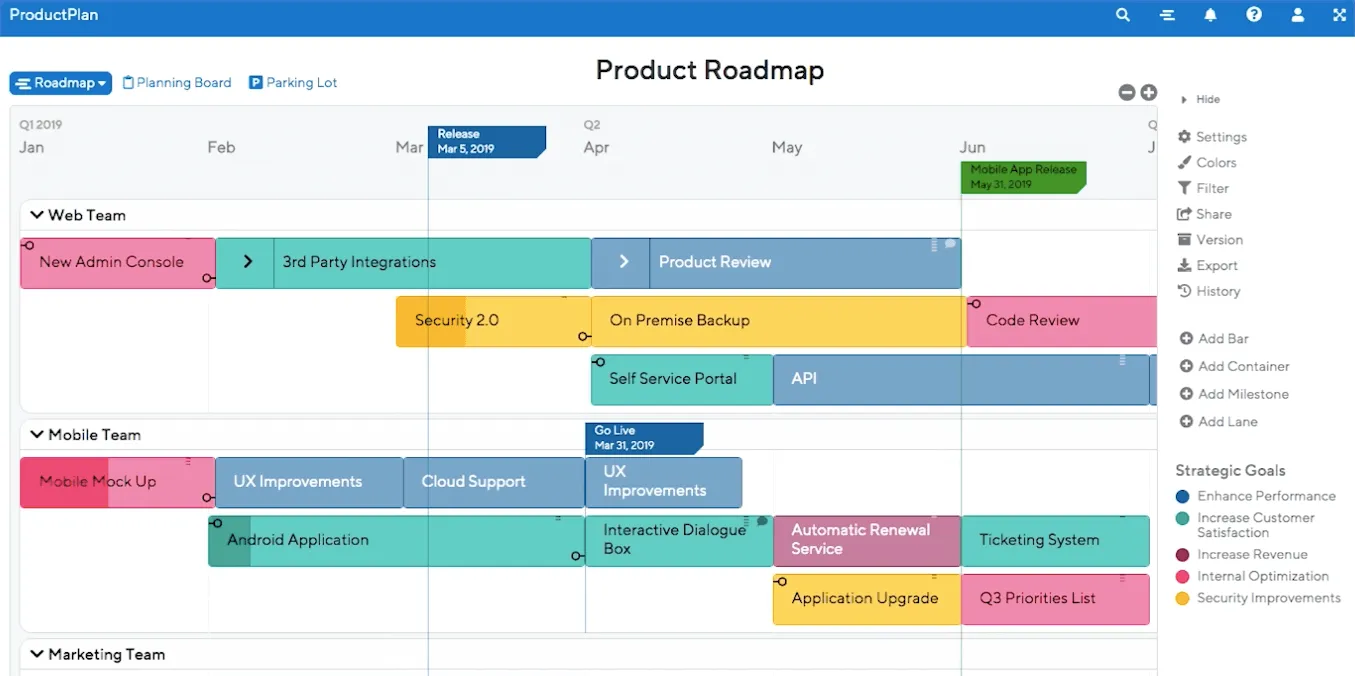
ProductPlan is a product roadmap platform used by product managers to plan features, align teams, and communicate product strategy. It focuses on visual roadmaps that help teams organize product initiatives, prioritize features, and share development plans with stakeholders. Many companies use ProductPlan when they want a clear way to present product strategy and coordinate work across product, engineering, and leadership teams.
Top features
- Visual product roadmaps: build timeline based roadmaps that clearly show upcoming features, product initiatives, and development priorities.
- Drag and drop roadmap builder: easily add, move, and organize roadmap items so product plans can be updated quickly as priorities change.
- Portfolio roadmaps: manage roadmaps across multiple products or teams and see how different initiatives connect to larger company goals.
- Collaboration and stakeholder sharing: share roadmaps with executives, team members, and stakeholders so everyone understands product direction and priorities.
- Integrations with development tools: connect ProductPlan with tools such as Jira and other development platforms so roadmap items can link directly to engineering work.
How it's better than Pendo
ProductPlan is stronger for roadmap planning and product strategy. While Pendo mainly focuses on product analytics and tracking user behavior inside applications, ProductPlan helps product teams build clear product roadmaps, prioritize initiatives, and communicate development plans with stakeholders. This makes it a better option for teams that want stronger roadmap planning and product strategy tools.
7. Rapidr
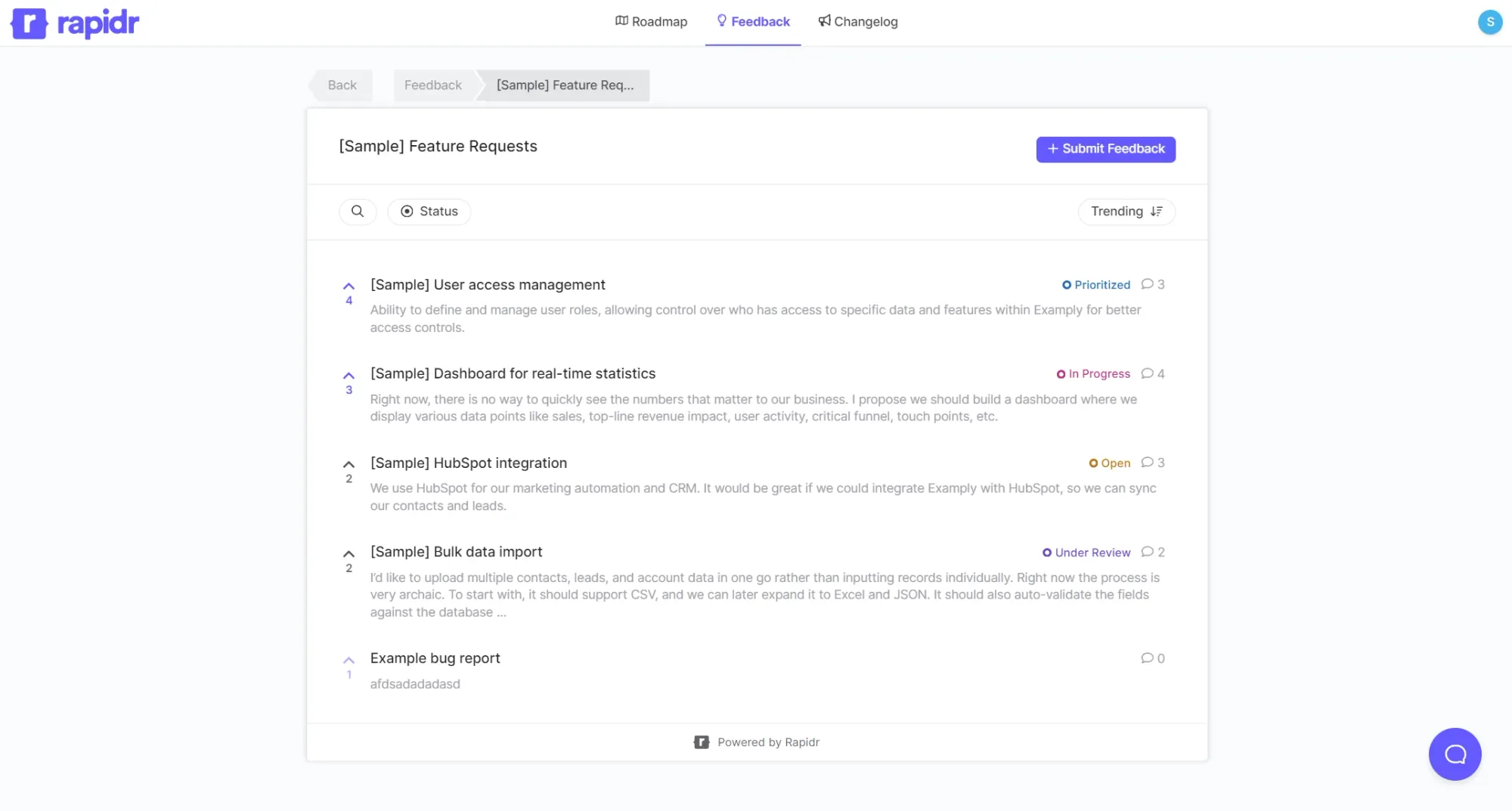
Rapidr is a product feedback and feature management platform that helps SaaS companies collect user ideas, prioritize product improvements, and communicate updates with customers. It brings feedback collection, feature request management, roadmaps, and changelog announcements into one system so product teams can move from customer suggestions to shipped features faster. Product managers often use Rapidr when they want a structured way to organize product feedback and turn it into development priorities.
Top features
- Feature request boards: collect ideas and product feedback from customers and team members in one place where users can submit suggestions and vote on requests.
- Feature voting and prioritization: customers can vote on ideas while product teams evaluate requests and prioritize development based on demand.
- Public product roadmaps: share planned features and development progress so users can see what the team is working on next.
- Product changelog: publish updates and notify customers when new features or improvements are released.
- Feedback widgets and integrations: collect feedback directly inside your product or website and connect requests with tools used by development teams.
Pendo vs Rapidr
Rapidr focuses on managing feature requests and product feedback rather than product analytics. While Pendo specializes in tracking user behavior and in-app engagement data, Rapidr helps product teams collect ideas, prioritize feature requests, and communicate product updates through roadmaps and changelogs. This makes it a better choice for teams that want to build their product roadmap based on direct user feedback.
8. Frill
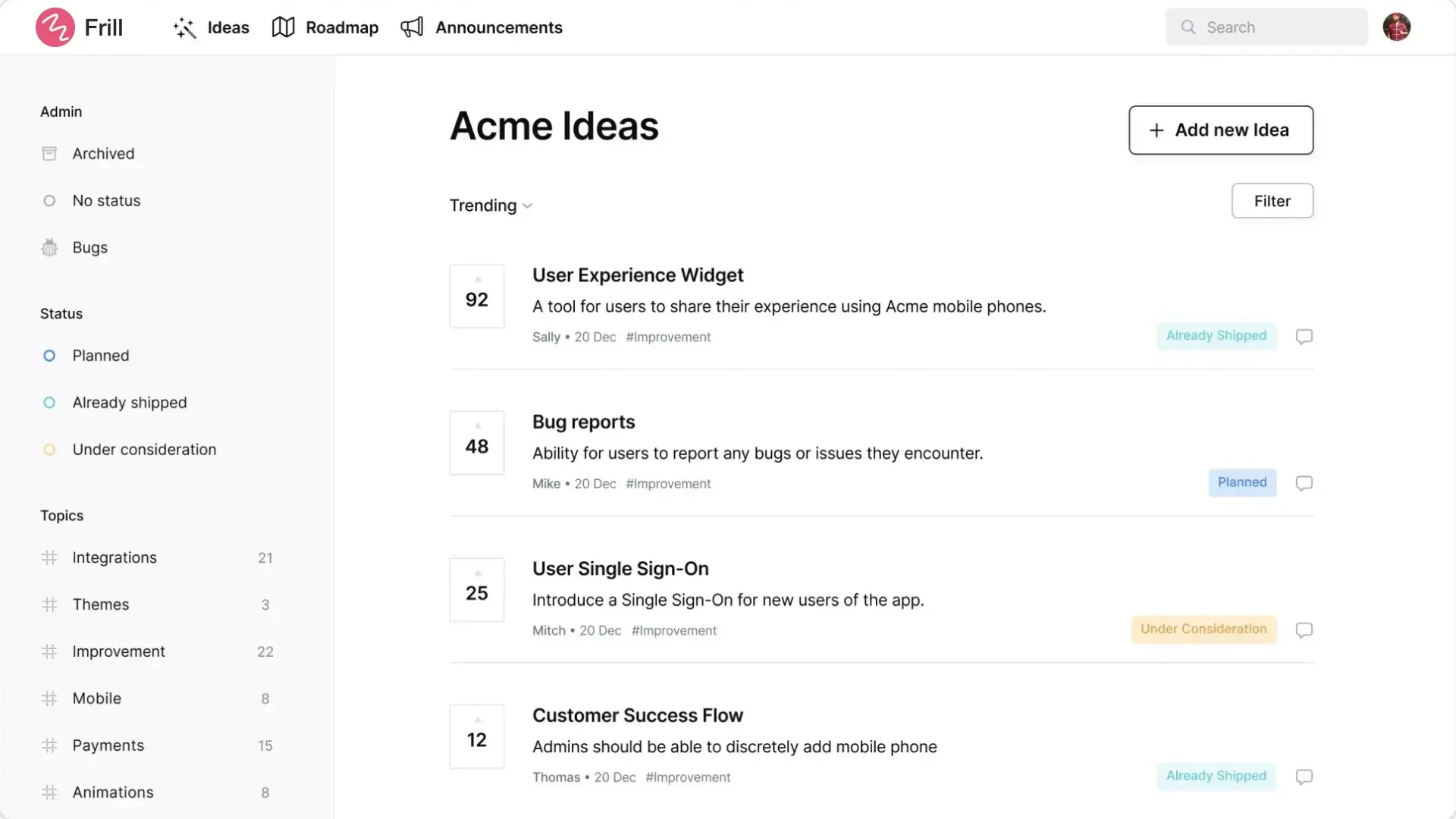
Frill is a customer feedback and roadmap platform that helps product teams collect ideas, prioritize feature requests, and communicate updates with users. It gives companies a central place where customers can submit suggestions, vote on features, and follow product development progress. Many SaaS teams choose Frill when they want a simple system for managing product feedback and sharing product updates without using complex product management software.
Top features
- Public feedback boards: collect feature requests and ideas from customers in one place where users can submit suggestions and vote on existing posts.
- Feature voting: allow customers to upvote the ideas they care about most so product teams can identify the most requested improvements.
- Public product roadmap: share upcoming features and product plans so users can see what the team is currently building or considering.
- Product changelog: publish updates and release notes that inform customers about new features and improvements.
- Embeddable feedback widgets: add feedback boards directly into your product or website so users can submit suggestions without leaving the app.
How it's better than Pendo
Frill is a better option for teams focused on product feedback and feature requests. While Pendo is mainly used for product analytics and tracking user behavior inside applications, Frill helps product teams collect ideas, prioritize feature requests through voting, and communicate product updates through roadmaps and changelogs. This makes it easier to build product improvements around direct customer feedback.
9. featureOS
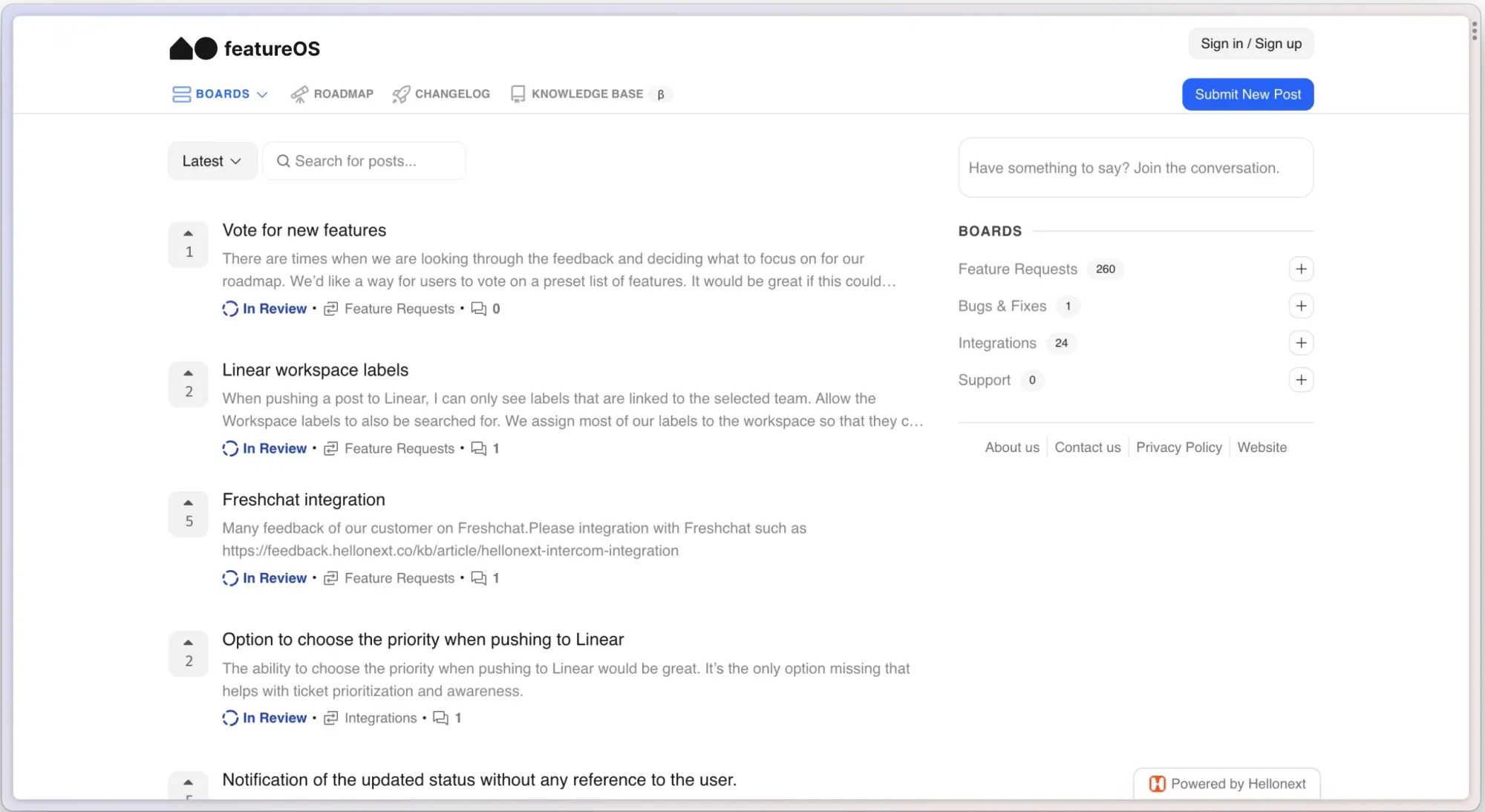
FeatureOS is a product feedback and roadmap platform that helps SaaS teams collect user ideas, prioritize feature requests, and communicate product updates. It combines feedback boards, roadmaps, changelogs, surveys, and documentation tools in one place so product managers can organize feedback and turn it into development plans. Teams that want a central hub for managing product feedback and communicating progress often use FeatureOS instead of relying on multiple tools.
Top features
- Feedback boards for collecting ideas: gather feature requests, suggestions, and product feedback from customers and internal team members in one organized space.
- Feature voting and prioritization: users can vote on ideas while product teams categorize and prioritize requests based on demand and impact.
- Product roadmaps: create public or internal roadmaps that show upcoming features, development progress, and completed updates.
- Changelog and release updates: publish product announcements and feature releases so users can stay informed about improvements.
- Surveys and forms: collect structured feedback using surveys and feedback forms that capture customer insights at different stages of the user journey.
Pendo vs featureOS
FeatureOS focuses more on feedback collection and roadmap communication. While Pendo is mainly built for product analytics and tracking user behavior inside applications, FeatureOS helps product teams gather feature requests, prioritize ideas, and communicate product updates through roadmaps and changelogs. This makes it a better choice for teams that want to build their product roadmap directly around customer feedback.
10. Trello
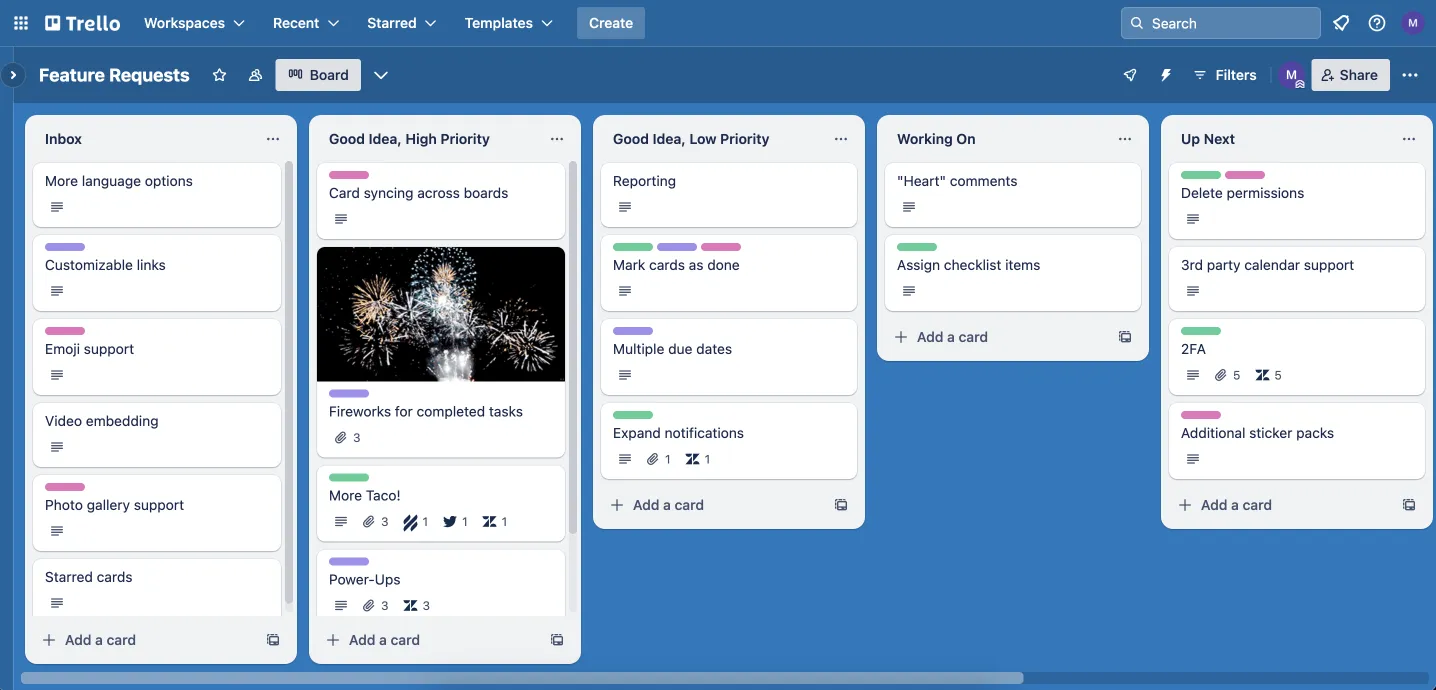
Trello is a project management and collaboration tool that many product teams use to organize tasks, track feature ideas, and manage product development workflows. It uses a simple board and card system where teams can create lists for ideas, planned features, development tasks, and completed work. Product managers often use Trello when they want a flexible way to manage feature requests and product planning without adopting complex product management platforms.
Top features
- Kanban boards for product workflows: organize feature ideas, development tasks, and feedback into boards with lists that represent different stages of the product development process.
- Cards for feature requests and tasks: each card can represent a feature idea, improvement request, or development task, with descriptions, attachments, and comments.
- Team collaboration tools: team members can comment on cards, assign tasks, add due dates, and collaborate directly inside product boards.
- Automation with Butler: automate repetitive actions such as moving cards, assigning tasks, or sending notifications when specific conditions are met.
- Power Ups and integrations: extend Trello with integrations for tools such as Slack, Google Drive, Jira, and other development or collaboration platforms.
How it's better than Pendo
Trello works better for teams that want a flexible system for managing product work and collaboration. While Pendo focuses heavily on product analytics and user behavior tracking inside applications, Trello helps teams organize feature ideas, development tasks, and product planning in a simple visual workflow that is easy for team members across departments to use.
11. Productboard
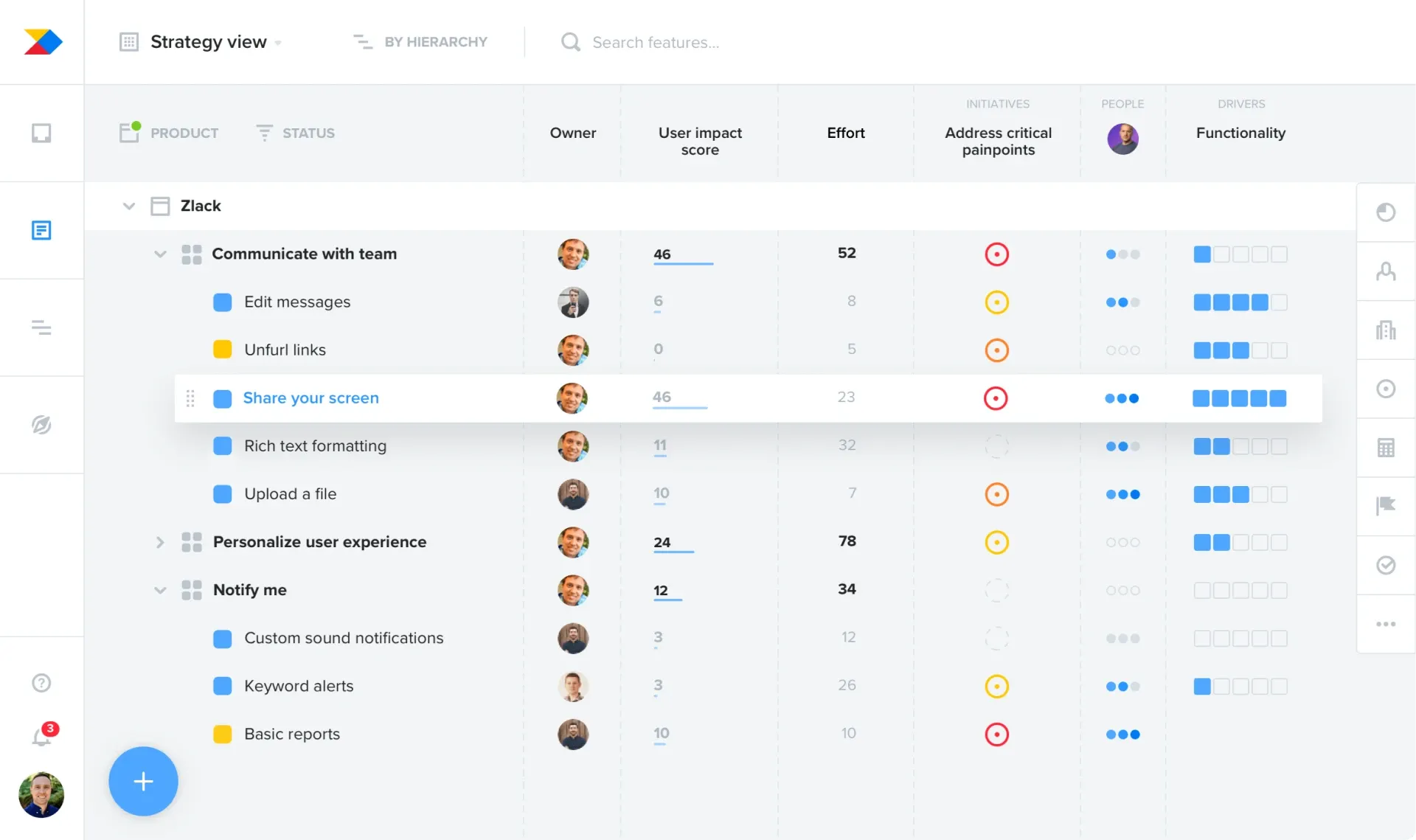
Productboard is a product management platform that helps teams collect customer feedback, understand user needs, and prioritize what to build next. It brings feedback from many channels into one system so product managers can organize insights, identify trends, and connect customer requests to product features. Many SaaS companies use Productboard when they want a structured way to translate user insights into product decisions and roadmap planning.
Top features
- Centralized feedback repository: collect and organize feedback from emails, support conversations, interviews, and other sources so product teams have one place to review customer input.
- Customer insights and tagging: categorize feedback using tags and notes so product managers can identify patterns in what customers are asking for.
- Feature prioritization tools: evaluate feature ideas using scoring frameworks and prioritization methods that help teams decide which features deliver the most value.
- Interactive product roadmaps: create shareable roadmaps that show stakeholders which features are planned, under development, or completed.
- Customer driven feature linking: connect user feedback directly to product features so teams understand which customer requests influence product decisions.
How it's better than Pendo
Productboard focuses more on understanding customer needs and turning feedback into product decisions. While Pendo is known for product analytics and tracking user behavior inside applications, Productboard gives product teams stronger tools for organizing feedback, prioritizing features, and shaping the product roadmap based on customer demand.
The total cost of Productboard depends on how many 'Makers' you have in your team. For example, five users on their Pro plan will cost $400 a month.
12. Aha! Ideas
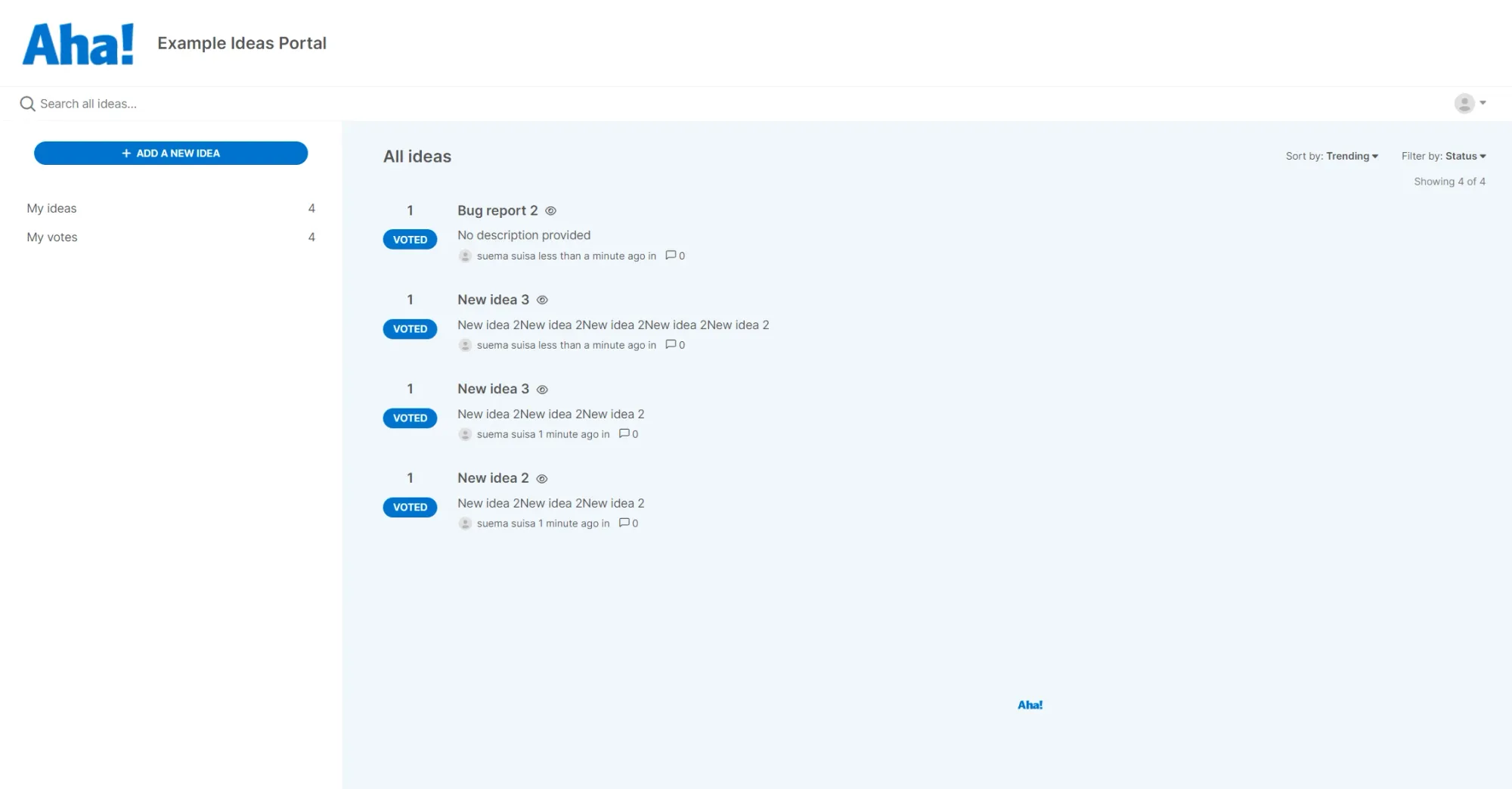
Aha! is a product management platform used by product managers to plan roadmaps, collect product feedback, and manage the entire product development strategy. It combines idea management, roadmap planning, and product strategy tools so teams can organize customer input and turn it into structured product plans. Companies that need a more strategic product planning tool often choose Aha! because it connects customer feedback with long term product goals.
Top features
- Idea management portal: collect product ideas and feedback from customers, team members, and stakeholders in one place, where requests can be reviewed and prioritized.
- Advanced product roadmaps: create visual roadmaps that show strategic goals, upcoming features, and release timelines across multiple products.
- Feature prioritization frameworks: evaluate feature requests using scoring models such as value versus effort to decide what should be built next.
- Product strategy planning: define business goals, product initiatives, and success metrics so teams align development work with company objectives.
- Development tool integrations: connect Aha! with tools such as Jira, Azure DevOps, and other development platforms so feature ideas can easily move into engineering workflows.
Pendo vs Aha!
Aha! is better suited for strategic product planning. While Pendo focuses heavily on product analytics and user behavior tracking, Aha! gives product teams stronger tools for roadmap planning, feature prioritization, and long term product strategy. This makes it a better option for product managers who want to turn customer feedback and ideas into structured product development plans.
Aha! pricing is split into separate "modules". To gather customer ideas, prioritize them, and make roadmaps, you'll need two modules. These are "Roadmaps" and "Ideas", costing $59 and $39 per user per month. So, altogether, it's $98 per user each month at the minimum.
Conclusion
The bottom line is that Pendo is a decent product-analytics tool, but a weak feedback tool. Their widgets have limited customizability, and the lack of a public feedback board makes discussing feature requests with users impossible.
Featurebase is one of the best Pendo alternatives for feedback. It has all the matching features and much more for an even lower price. Besides feedback boards, it offers changelogs, roadmaps, surveys, and a Help Center - all with a beautiful design.
It comes with a Free Plan that allows unlimited posts. You can automatically migrate over from Pendo in minutes, so there's no downside to trying it. 👇
✨ Start collecting & managing feedback with Featurebase for free →